Thursday, December 03, 2009

America's Top College Professor - WSJ.com


    • Like Prof. West, Prof. Burger believes that empathy is the key to good teaching.
    • Prof. Burger says that he wants "to think about what it's like to be sitting in that audience, in a sea of people, when the professor is so far away he's a dot and I'm looking at overhead transparencies. What is that experience like?"
    • Prof. Burger says that the role of a teacher is to change lives.
    • As much as he finds math fascinating, he realizes that most people will not use calculus after college. The utilitarian promise "is an empty one," he notes. "You don't need to know how to build a bridge to go over one." He says that the hardest thing professors can ask themselves is "the 10-year question." "What will my students retain from my class 10 years out?" And so his lecture is devoted to showing the audience how to "think mathematically."
    • "I don't give grades; I just report the news"
    • he is only convinced a student understands a concept when he can "explain it to an 8-year-old."

Posted from Diigo. The rest of my favorite links are here.

Friday, November 27, 2009

My Favorite Liar | Zen Moments

  • tags: no_tag

    • What made Dr. K memorable was a gimmick he employed that began with his introduction at the beginning of his first class:

      “Now I know some of you have already heard of me, but for the benefit of those who are unfamiliar, let me explain how I teach. Between today until the class right before finals, it is my intention to work into each of my lectures … one lie. Your job, as students, among other things, is to try and catch me in the Lie of the Day.”

    • Early in the quarter, the Lie of the Day was usually obvious – immediately triggering a forest of raised hands to challenge the falsehood. Dr. K would smile, draw a line through that section of the board, and utter his trademark phrase “Very good! In fact, the opposite is true. Moving on … ”

      As the quarter progressed, the Lie of the Day became more subtle, and many ended up slipping past a majority of the students unnoticed until a particularly alert person stopped the lecture to flag the disinformation.

    • On the days when nobody caught the lie, we all sat in silence, looking at each other as Dr. K, looking quite pleased with himself, said with a sly grin: “Ah ha! Each of you has one falsehood in your lecture notes. Discuss amongst yourselves what it might be, and I will tell you next Monday. That is all.”
      • And while my knowledge of the Economics of Capital Markets has faded in time, the lessons that stayed with me were his real legacy:

        • “Experts” can be wrong, and say things that sound right – so build a habit of evaluating new information and check it against things you already accept as fact.
        • If you see something wrong, take the initiative to flag it as misinformation.
        • A sense of playfulness is the best defense against taking yourself too seriously.

Posted from Diigo. The rest of my favorite links are here.

My Favorite Liar | Zen Moments

    • What made Dr. K memorable was a gimmick he employed that began with his introduction at the beginning of his first class:

      “Now I know some of you have already heard of me, but for the benefit of those who are unfamiliar, let me explain how I teach. Between today until the class right before finals, it is my intention to work into each of my lectures … one lie. Your job, as students, among other things, is to try and catch me in the Lie of the Day.”

    • Early in the quarter, the Lie of the Day was usually obvious – immediately triggering a forest of raised hands to challenge the falsehood. Dr. K would smile, draw a line through that section of the board, and utter his trademark phrase “Very good! In fact, the opposite is true. Moving on … ”

      As the quarter progressed, the Lie of the Day became more subtle, and many ended up slipping past a majority of the students unnoticed until a particularly alert person stopped the lecture to flag the disinformation.

    • On the days when nobody caught the lie, we all sat in silence, looking at each other as Dr. K, looking quite pleased with himself, said with a sly grin: “Ah ha! Each of you has one falsehood in your lecture notes. Discuss amongst yourselves what it might be, and I will tell you next Monday. That is all.”
      • And while my knowledge of the Economics of Capital Markets has faded in time, the lessons that stayed with me were his real legacy:

        • “Experts” can be wrong, and say things that sound right – so build a habit of evaluating new information and check it against things you already accept as fact.
        • If you see something wrong, take the initiative to flag it as misinformation.
        • A sense of playfulness is the best defense against taking yourself too seriously.

Posted from Diigo. The rest of my favorite links are here.

Google Friend Connect: Add social features to your site

:

Posted via web from tellio's posterous

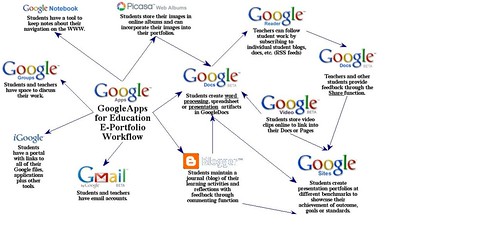
Image for display / worksheets: Google Apps for Eportfolios (via activehistory.co.uk / classtools.net)

Check out this website I found at classtools.net

Posted via web from tellio's posterous

Wednesday, November 25, 2009

Kentucky Writing Project Teacher in Censorship Struggle

Censorship, alive and well and thriving in Kentucky? Yes, and Risha Mullins, a teacher in Montgomery County, Kentucky can well attest to it. Sally Martin, Director of the Eastern Kentucky University Writing Project, has taken up her cause along with prominent writers like Laurie Halse Anderson whose work, Twisted, (along with Chris Crutcher's Deadline) have been removed from the classrooms. Read what Martin says:

Many of you know Risha Mullins, who was a 2008 participant in the Holocaust Education Network (HEN) Institute in NYC with Sondra Perl. She presented at the KWPN Fall conference describing the work she's done in her classroom this past year, using the holocaust to raise issues of social justice in her classroom to expand her students' thinking. Ironically, at the same time she is being heralded by the HEN for her work, she is having young adult literature books--initially one of the holocaust readings she used, then Chris Crutcher's Deadline, Laurie Halse Anderson's Twisted--removed from her classroom. Even though these books were there as books of choice, only, and the school's Review Committee approved them, the superintendent overruled their decision, on all but the holocaust novel, and held the books back. Additional actions by school officials have Risha very concerned for her job.

Risha sponsors an after-school bookclub that has numbered over 100 members who raise their own money to buy books and have travelled with Risha to the University of West Virginia for a workshop with Nikki Giovanni and to Washington, DC to tour the Holocaust Museum with a survivor and board members of the HEN. Just this weekend, Risha learned that she achieved National Board Certification. She has written her own young adult novel set in modern times in a holocaust context that is being read by Penguin, as well. She is an excellent and inspiring teacher.

At the ALAN breakfast this morning at NCTE, Laurie Halse Anderson recognized Risha in front of the 600 in attendance as the key example of the seriousness of censorship. Risha is recieving much support in this challenge from HEN and other parties outside of Kentucky, but I would like to have her home, KWPN, support her across the state, as well. According to Risha, a reporter from the Lexington Herald Leader has written a story on the heated conflict in Montgomery County which is going to be published very soon. If you will, please notify your TC's and request that they act on Risha's behalf. I suggest that we send letters to the paper in response to the story--when it is published--either by mail or on the website. Another approach would be simply to email Risha with your support. Risha.Mullins@montgomery.kyschools.us

Thank you,
Sally


Here is the link to the school board's page with email addresses that you can use to show support for Mullins.
Here is the link to the superintendent in question:  Daniel Freeman,  daniel.freeman@montgomery.kyschools.us
The county newspaper is the Mt. Sterling Advocate whose editor is Jamie Vinson-Sturgill,859-498-2222, news@msadvocate.com.  Here is their letter to editor submission page. 

Below you can see Mullins on the left with author Laurie Halse Anderson. Spread the word.  Use the information above and make a difference today.


Study Hacks » Blog Archive » The Steve Martin Method: A Master Comedian's Advice for Becoming Famous

  • The Steve Martin Method


    • “Be so good they can’t ignore you.”


      • Forget all the frustration, the tricks, and the worry. Just focus on becoming good. Really damn good. Outstanding. Unlike anyone who has come before you.


    • Martin’s Two Pieces of Advice for Applying the Method


      • Martin Tip #1: Intellectualize.


        • This restless urge to understand then innovate led him to be outstanding.


        • Understand what the best exemplars in your field do well. Figure out why. Then ask how you can mix, match, and reconstruct these elements into something new and even better.


      • Martin Tip #2: Don’t wander.


        • staying diligent in his interest in the one field he was trying to master; being able to ignore the urge to start working on other projects at the same time.


        • if you don’t saturate your life in a single quest, you’ll dilute your focus to a point where becoming outstanding becomes out of reach.


    • If you’re looking to become a leader in your field, honestly evaluate your talent level. Don’t compare yourself to others who have had success. That’s a path toward frustration. Instead, ask yourself, candidly, whether you’re so good you can’t be ignored. If not, then get back to work.


Posted from Diigo. The rest of my favorite links are here.

Saturday, October 17, 2009

Thursday, September 17, 2009

History Timeline of Green Self-Reliance - Timeline of Whole Earth Catalog, Victory Gardens Organic Food, Thoreau, Rodale - Popular Mechanics

Droll and informative.

Posted via web from tellio's posterous

Breakthrough Nano Tech Will Boost Solar Power Efficiency : TreeHugger

"Inexpensive Nanostructure Film Keeps Photons from Bouncing Off
That's the beauty of science. You discover something new, and then you keep finding new applications for it. Chemical engineers at Oregon State University (OSU) have invented a new way to deposit "nanostructure films" on a variety of surfaces. The obvious use is for eyeglasses; this could make them better and less expensive. But the holy grail here is making more efficient solar panels to reduce the cost of solar power."

Posted via web from tellio's posterous

Tuesday, September 15, 2009

Done: Reduce Task Friction to Get to Task Completion

“If you believe in what you are doing, then let nothing hold you up in your work. Much of the best work of the world has been done against seeming impossibilities. The thing is to get the work done.” - Dale Carnegie

Post written by Leo Babauta. Follow me on Twitter.

“Done” is a beautiful word.

It means you’ve achieved something, no matter how miniscule, a victory in a world filled with defeats. It is a tiny leap of joy in your heart, not only a step towards something wonderful but actually something wonderful itself.

Done means you’ve won, in a battle against procrastination and distraction and endless boring meetings and the constant requests of others, in the battle against a world conspiring to stop Done from ever happening.

Let’s make that battle easier. Let’s minimize the friction, all the forces against you, and make Done something easy.

Reduce the friction. Grease the slope towards done. Then give yourself a small nudge, and you’re off.

The Friction
What are the things that stop you from getting to done, from even starting on work sometimes? Let’s list a few of bigger culprits:

  • Being overwhelmed by having too much to do.
  • Too many distractions, such as reading on the web.
  • Procrastinating – dreading a task.
  • Not wanting to do a task because it’s boring or hard.
  • Being intimidated by a large project.
  • Tools are distracting or tough to use.
  • Fiddling with tools instead of doing.
  • Other people, making requests, calling, IMing, emailing.
  • Meetings.

Getting to Done
Given the above list of friction, how can we reduce the friction to get to done? I can’t give a solution to every single problem that every single reader faces, except in a general way:

Focus on every single friction, and find a way to reduce or eliminate it.

The more you can do this, the less friction you’ll have. And the easier it’ll be to get done.

Here are just a few examples:

  • Eliminate meetings. As much as possible. They’re toxic. Focus on actual work.
  • Eliminate distractions. Turn off email notifications, Twitter, the Internet in general. Turn off phones except certain hours. Only check email at predesignated times. Clear clutter. Don’t dawdle on this, though.
  • Pick simple tools. Not complicated ones, not ones that have distractions. Best tool for writing? A text editor such as TextEdit or Notepad.
  • Make a task really small. Small is not overwhelming or intimidating. It’s easy. You can get to done faster.
  • Focus on one thing at a time. Having too many things is overwhelming. What can you do right now that matters?
  • Make a project smaller. Reduce the scope. Have it doable in a few days or a week. Work on the other parts when the first part is done.
  • Set office hours. Ask people not to interrupt you except at certain times of the day.
  • Push back smaller tasks. The other things you need to do that interrupt you. Put them in a text file, and do them an hour before you finish working, so they don’t get in the way.
  • Don’t work on boring stuff. Find stuff that excites you. If you can’t, consider changing jobs.

The Art of the Small
As you might have noticed above, small is better when it comes to getting to completion. It’s easier, which is less friction. It’s less intimidating.

But more than that, small tasks and projects are victories. You can quickly get to completion and feel great about it. And that compels you to keep going.

Recently, for example, I launched my new minimalism blog, mnmlist.com. It took three days. One day to buy the domain, set up Wordpress, and find a theme to start from. Another day to tweak the theme to what I wanted and write a few posts. A third day to write more posts and announce it on Twitter and here on Zen Habits.

Three days, and I was at Done. And getting it public was a big motivator, making it exciting and making me want to work quickly and get to completion.

It doesn’t work this way with large projects. Writing a book, for example, often takes at least six months or even more than a year. Which makes it incredibly difficult, so many writers fail. Lots of large projects work this way — they’re hard to finish, hard to motivate yourself, hard to stay excited about.

A couple other examples: I’m writing a new book, called Focus, by writing it in small chunks (I call them beta versions) and making it public. Each version is a small project, but they can all be done quickly. Also, I released the theme of mnmlist.com by tweaking the theme I was using and making it ready for release, in just one day (see below for more info). Quickly got to done, and released it to the public. It was satisfying.

Keeping tasks and projects small means they have less friction, and it’s easier to stay motivated. Keep things simple. Narrow your focus. Do less, have less features, offer less services. Small is better, because you’ll get to completion.

—
Bloggers: I’ve released a Wordpress theme based on my new minimalism blog, mnmlist.com … check it out here: mnmlist theme. It’s free, uncopyrighted, and minimalist, for those who just want to blog without distractions, without anything taking away from their content.

—
Read more about simple productivity, focus and getting great things done in my book, The Power of Less.

-->

Done means you won!

Posted via web from tellio's posterous

Nik's Quick Shout

Some very nice tools for k-doc

Posted via web from tellio's posterous

Friday, September 11, 2009

Fake Rocks, Salami Commanders, and Just Enough to Start | 43 Folders

Sometimes I think Merlin Mann is a self-serving swine. Well, actually most of the time I do. Just listen to his voice. But I like this. A lot.

Posted via web from tellio's posterous

No Media Kings » How To Enjoy Research

Here’s five approaches to research that worked for me.

1. Choose a research subject that you’re fascinated in — not just something you think would make a good story subject. I’ve been interested in Detroit ever since a brief visit in ‘94, but despite it only being 4 hours away I’d never visited again. Writing a book set there was a great way to spend some focused time learning about the place. Even if I decided not to write the book it would have been time well spent.

2. Talk to people. Let everyone know what you’re researching. Talk to experts & enthusiasts alike. On the phone or in person — email interviews are just work for people. Be social, have some fun, meet some characters and see how far a conversation with a stranger can go.

3. Go places. There’s a million details that even a gorgeous photo won’t expose you to. Get a list of places of interest you’d like to visit and maybe go with one of the strangers from #2. Research as adventure! Shannon and I went to Detroit twice for a few days — she got tons of photo refs, and I got lots of story and character ideas.

4. Niche websites and blogs are good starting places. Especially when they can connect you with people and new places to go. For me it was a good starting point for cultural touchstones like scrappers, 8 Mile, political corruption.

5. Read some books in a style you enjoy. Long form non-fiction generally makes me glaze over (which allows me to daydream about the subject at hand, so admittedly still useful) so I went with some more entertainingly written books. While a bit sensational, Devil’s Night: And Other True Tales of Detroit by Zev Chafets was a compelling read and gave me some ideas about the racial dynamics that are still relevant today, 20 years after it was written.

Final thoughts: in excess, research can be a procrastination method with diminishing returns. But for someone like me, who is more on the make-it-up-as-you-go school, it’s helped bring a richness in ideas and specificity in detail to my recent work — and has been enjoyable to boot.

This is good advice for any researcher with special emphasis on number one.

Posted via web from tellio's posterous

Monday, July 27, 2009

Head for iPod Educational Hills--A Beginning Collection of Places, People, and Ptools (sorry)

What I have done here is find a rich blog post, filled it out a little bit with some easier linkages, added a few links, and generally acted as an editor to summarize so that it is a little easier to follow. Sometimes bullet points are best.  What Ms. Weir has done in her original blog post is to model just how you might think out loud as you prepare for classes and prepare to use something new like iPod Touch in the classroom.  She is not afraid to do a little "woolgathering" because you will note in the comments section that this thinking out loud generated lots of good further suggestions.  (There is some discussion these days about the value of comments on weblogs, but I think this post is a good arguments for keeping them  In fact, I have added about half the post from the comment section and learned quite a bit about places to find new apps for the Touch.
So this blog post does three things:
Shows how one teacher noodles out loud about possibilities for her classes,
Shows lots of info about a particular topic--iPod Touch in the classroom,

Shows how to create a blog post from someone else's post.

Planning for the 09-10 School Year | Ms. Weir's Musings
  • have started reading a blog by Rob de Lorenzo (an Ontario educator) called “Mobile Learning” which discusses using cell phones and iPods in the classroom
  • look for apps that fit your particular units, novels, books, projects, and activities.  There are so many now.
  • the Driver’s Ed app (we do a couple short articles about driving and getting your license so this might be an engaging way to have them involved in the class work as well as prepare them for the possible issues they might encounter while driving),
  • I think the iTouches could very much have a place here in terms of allowing the students to find podcasts on these in iTunes, having them listen then synthesize what they have learned through the podcasts with what we have been discussing in class and finally have them apply it to a current event in the real world (which they could also find through using Safari on the iTouch).
  • There are so many educational applications for the iTouch. If they are 2nd Gen - with the 3.0 iPhone software ($9.95) they practically have an iPhone- so recording for the podcasts will be easy. I applaud you using these in the classroom. You might follow @iear on Twitter (or go to the website) his whole platform is using iTouch & iPhones in the classroom. I’m trying out the teacher app Educate for him. It’s a lesson planner, gradebook, attendance, moodle, and so much more! Good luck this year!!
  • The AP Mobile App is wonderful, free source of current events that you can tailor to your area or find world news.
  • The Digital Lifestyle website  and they review a lot of Apps and filter through the APP store and provide the best for several categories.
  • iTunesU is a fantastic source for content right now. I will be doing a workshop on this at the ABEL Summer Institute in August , as well you can visit ipodliteracy.com.
  • I’d use an app like ShoZu or Wordpress to type in a blog post on a class blog.
  • Check out youthvoices.net
  • I am also interested in bringing iPod Touches into my classroom and have been collecting resources at http://thefilecabinet.pbworks.com under the iPod link.
  • The Writer in Me - Writing, Teaching, Living.


Reblog this post [with Zemanta]